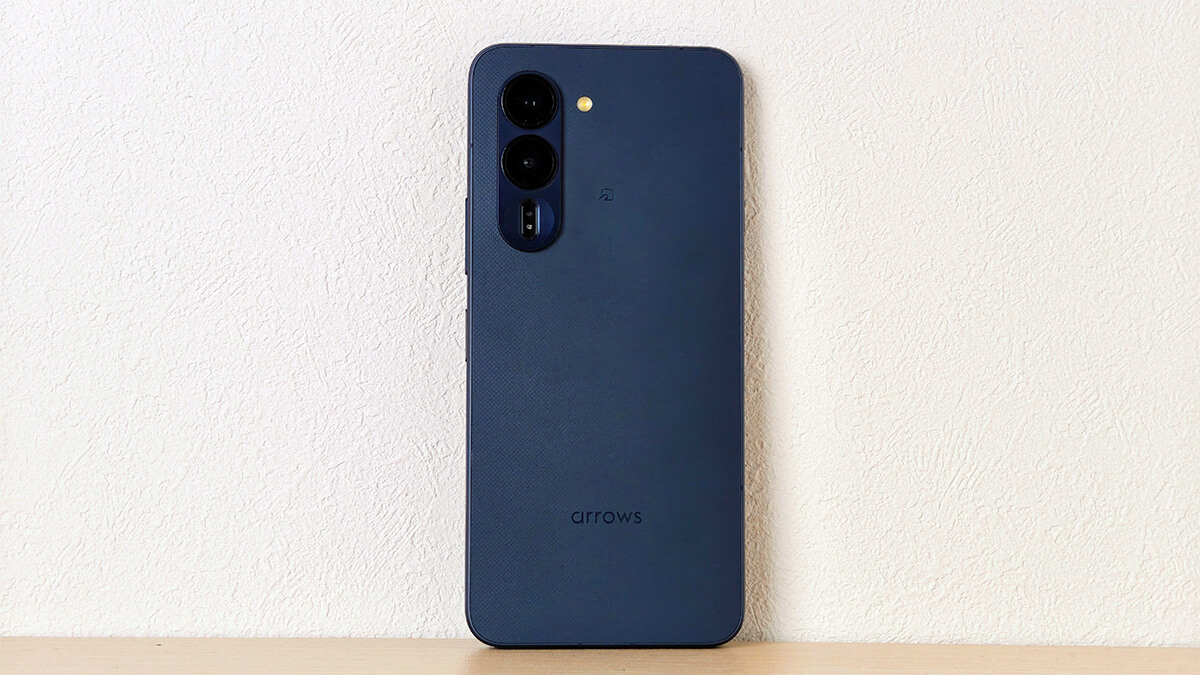
FCNT lent me the arrows Alpha2 M10.
A rugged phone that feels smooth in everyday use
The arrows Alpha2 runs on a MediaTek Dimensity 8350 Extreme, which is plenty for smooth everyday use.
On top of IP66 / IP68 / IP69 water and dust resistance, it passes MIL-STD-810H and FCNT’s own drop tests. Add the long-life battery, up to three OS updates and up to five years of security updates, and this is a phone you can keep using with confidence for a long time.

This review is based on the 12GB + 512GB version running W1WK36.0-97.
- Rugged: water, dust and shock resistant
- 144Hz refresh rate
- 5,370mAh battery with bypass charging
- USB 3.2 Gen 1 port with video output
- microSD card support
- Relatively light
- Weak gaming performance
- Camera struggles with close-up subjects
- Only one nano SIM can be used
| Item | arrows Alpha2 M10 |
|---|---|
| OS | Android 16 |
| RAM | 8GB / 12GB |
| Storage | 256GB / 512GB |
| SoC | MediaTek Dimensity 8350 Extreme |
| Display | 6.4 inches 1200 x 2670 20:9 aspect ratio 144Hz refresh rate OLED |
| Size | 155 × 72 × 8.6mm |
| Weight | 187g |
| SIM | nano SIM + eSIM (nano SIM + eSIM or eSIM ×2) |
| Rear camera | 50MP (wide, SONY LYTIA 710 IMX917 1/1.5″ F1.88) + 50MP (ultra-wide, Samsung S5KJNS 1/2.7″ F2.05) |
| Front camera | 50MP (Samsung S5KJNS) |
| Battery | 5370mAh |
| USB port | USB Type-C (USB 3.2 Gen 1) |
| Bands | 5G NR: n1/n3/n28/n40/n41/n77/n78/n79 4G: LTE FDD: 1/2/3/4/5/8/12/18/19/21/28 4G: LTE TDD: 38/39/41/42 3G: WCDMA: 1/2/4/5/8 2G: GSM: 2/3/5/8 |
Display: easy to read outdoors
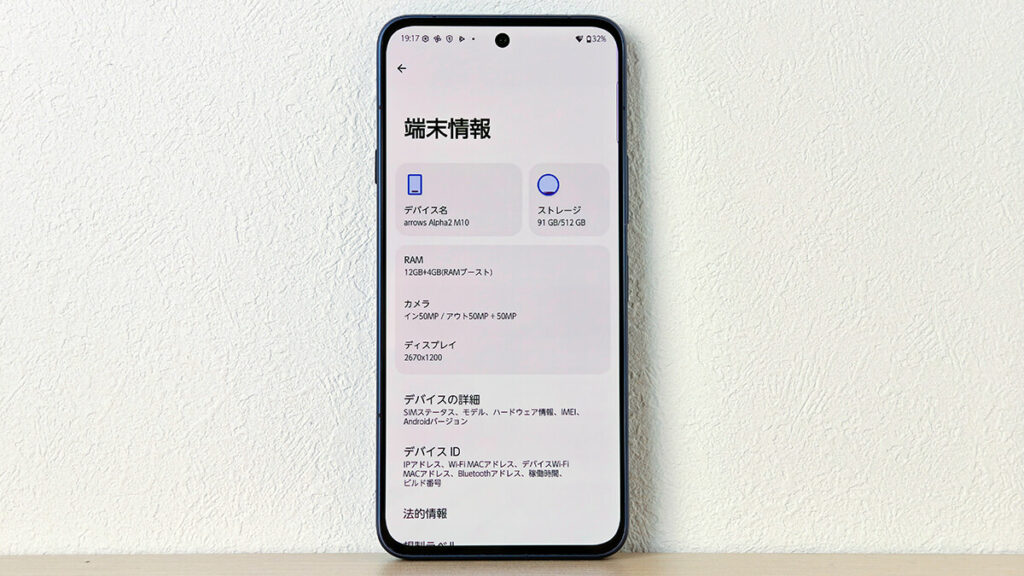
The arrows Alpha2 has a 6.4-inch display at 1200 x 2670.
It’s flat, so it stays readable right out to the edges.
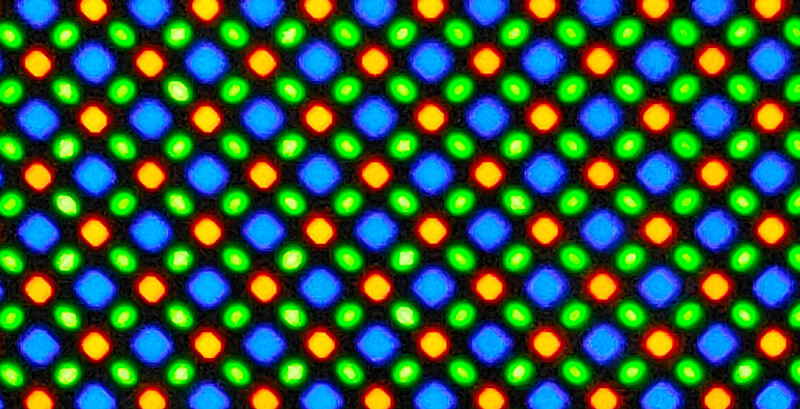
The subpixel layout is diamond pixel.
Measuring brightness with an LX-1336B on a full-white image at maximum brightness, it reached 1042 nits.
That’s bright enough to read outdoors during the day.
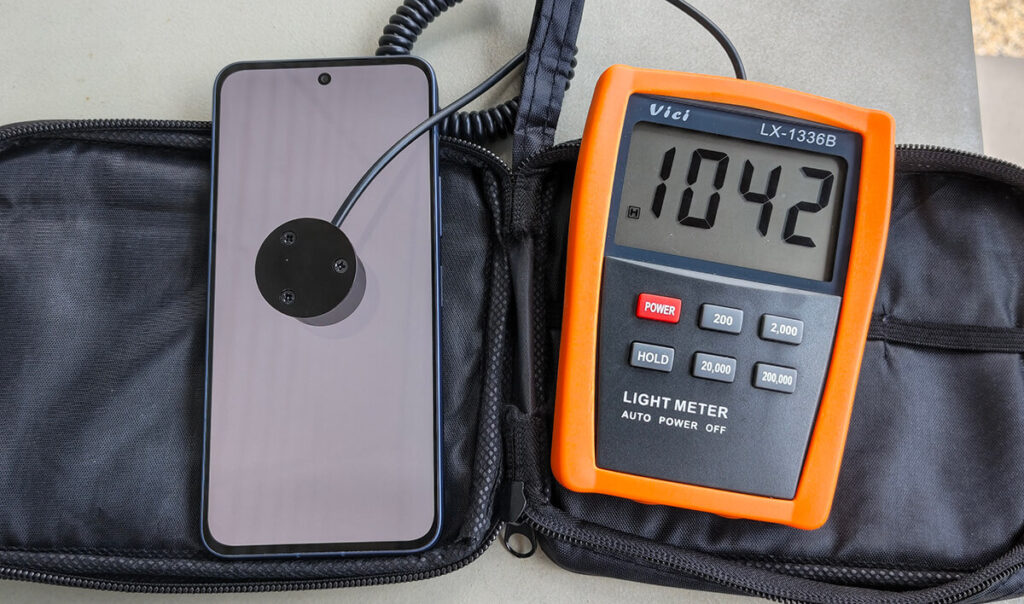
It’s the unit used for brightness — the higher the number, the brighter the screen.
Around 400–500 nits is generally considered the minimum indoors, and 800–1000 nits outdoors.
Note that on many phones the maximum is capped unless auto-brightness is turned on.
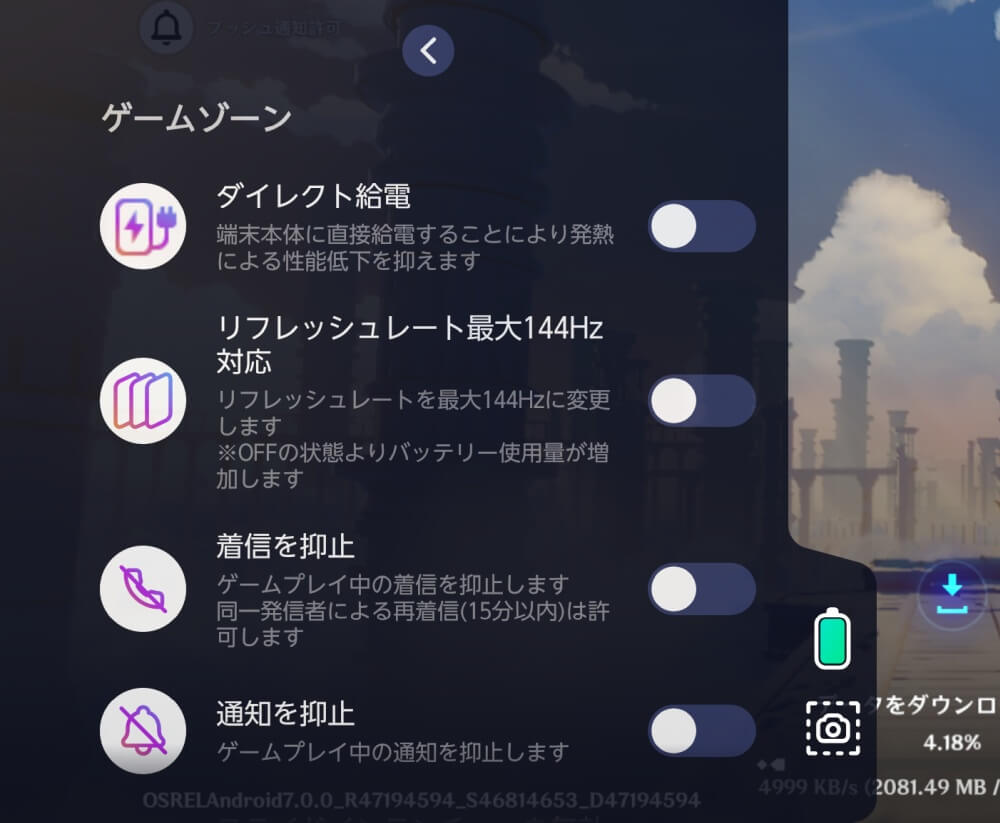
The refresh rate goes up to 144Hz.
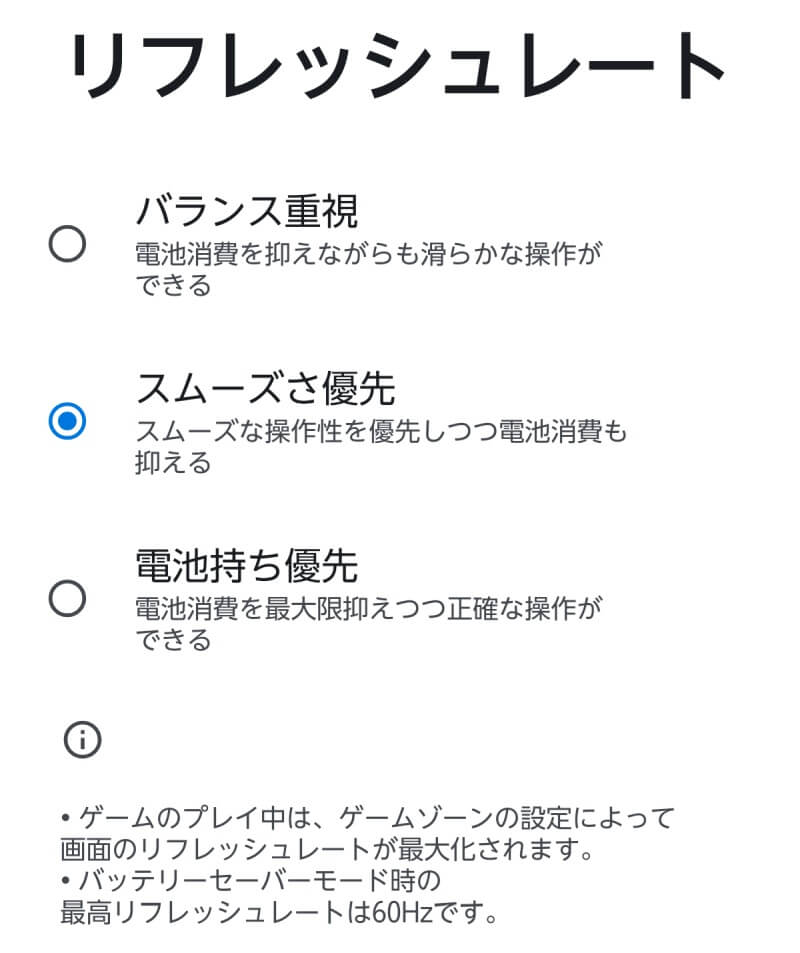
It normally runs at 120Hz; adding an app to Game Mode and enabling 144Hz there switches it to 144Hz.
Measuring the touch sampling rate with Touch Sample Rate Tester, the Movement Rate averaged around 310Hz for both single and multi touch.
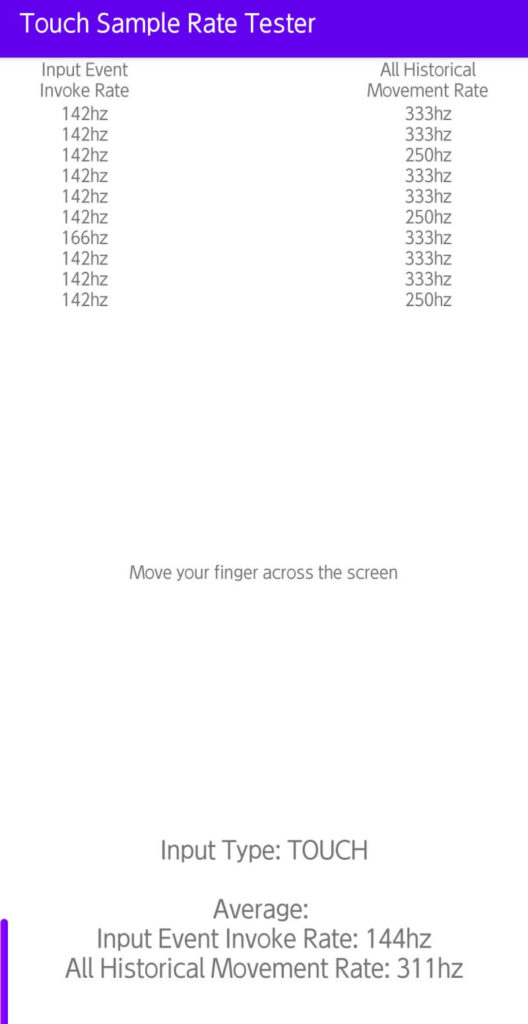
It relates to how sensitive the screen is when you touch it.
The higher the number, the more quickly the phone tends to respond to your touch.
In practice, though, touch latency isn’t determined by this alone — other factors come into play, and the final latency can still be high.
As a rough guide, a Movement Rate around twice the refresh rate is average, more than three times is high, and gaming phones are often in the five to six times range.
Touch latency measured with the WALT Latency Timer came to 50.9ms in total, which is on the high side.
This isn’t a phone you’d buy for gaming, so it probably won’t cause problems in practice, but still…
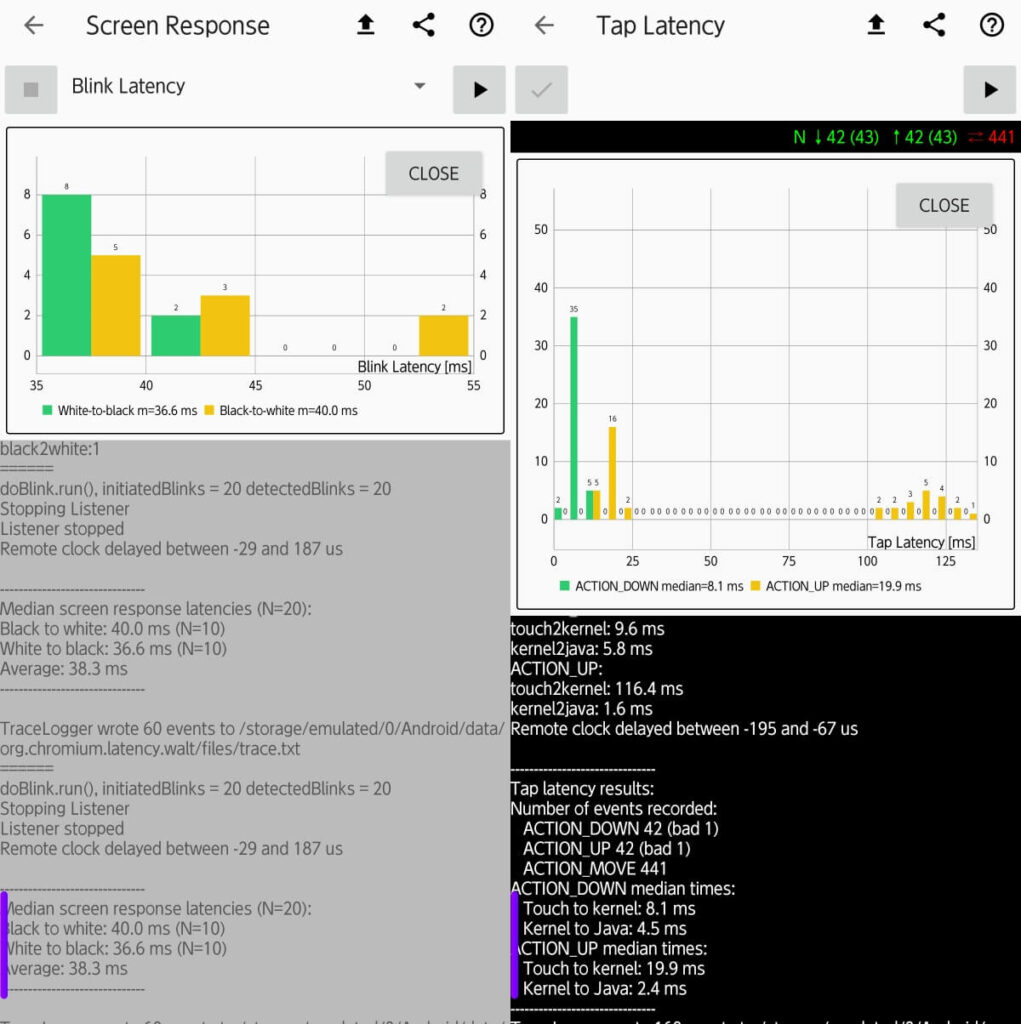
It’s the time it takes for the phone to respond after you touch the screen.
The smaller the number, the faster it responds.
Gaming phones are around 25ms, while regular phones are typically in the low 30s to 40ms.
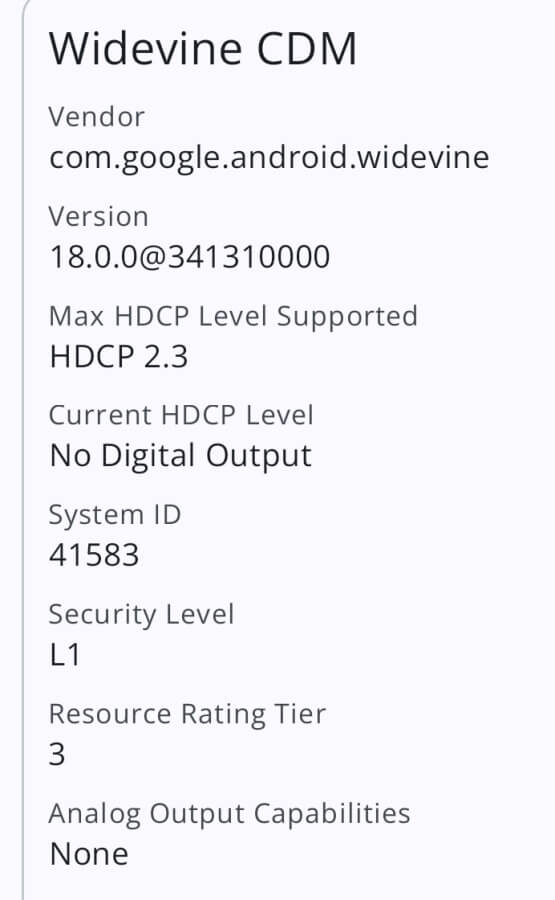
It supports Widevine L1, so you get high-quality streaming playback on services like Amazon Prime Video.
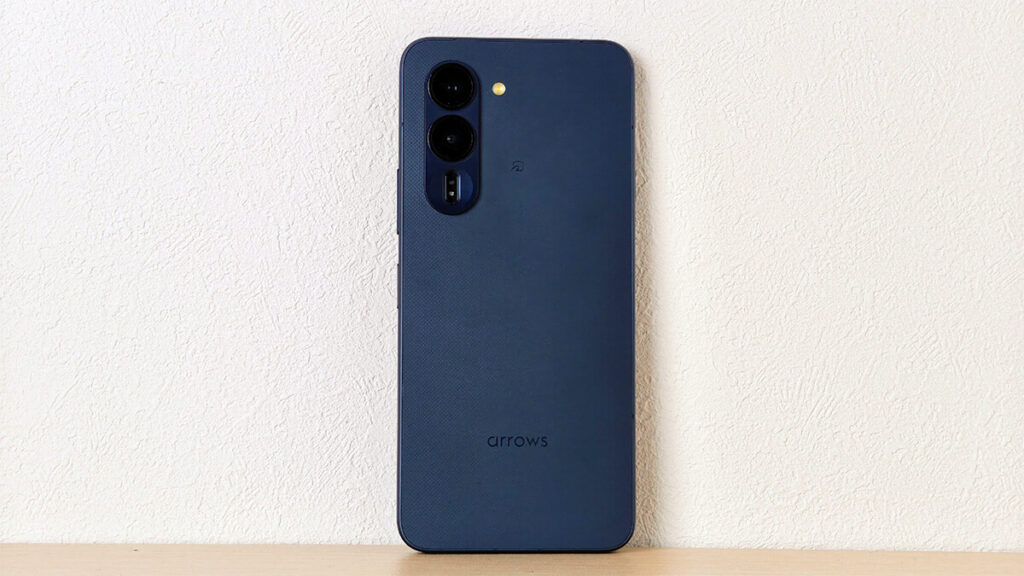
Back: resists fingerprints
The back has a smooth finish that doesn’t pick up fingerprints easily.
The body is aluminium and glass fiber, and the front panel uses Corning Gorilla Glass Victus 2 for extra durability.
It has FeliCa and Osaifu-Keitai support.
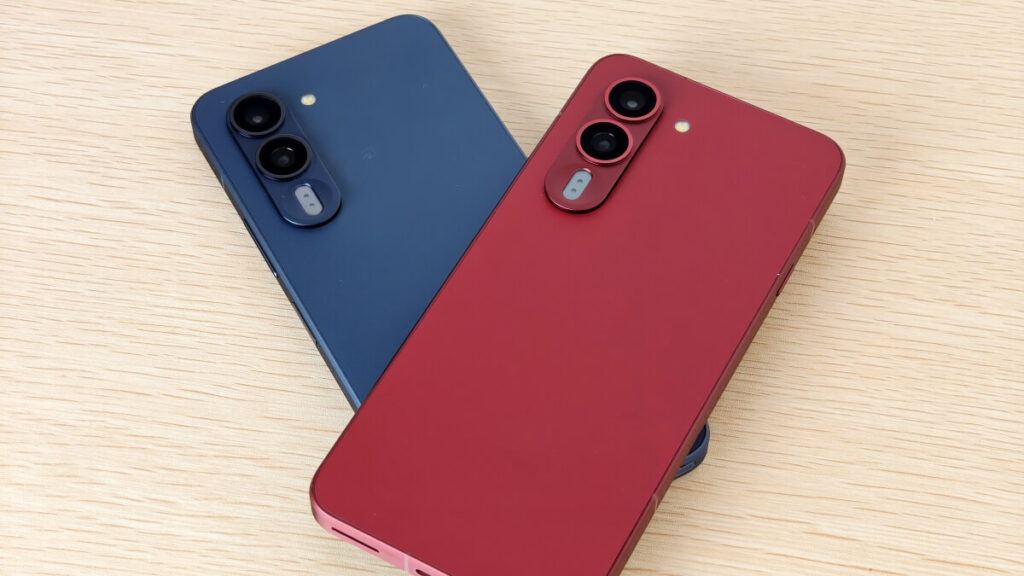
Both the indigo and the red are muted, understated colors, and they look good.
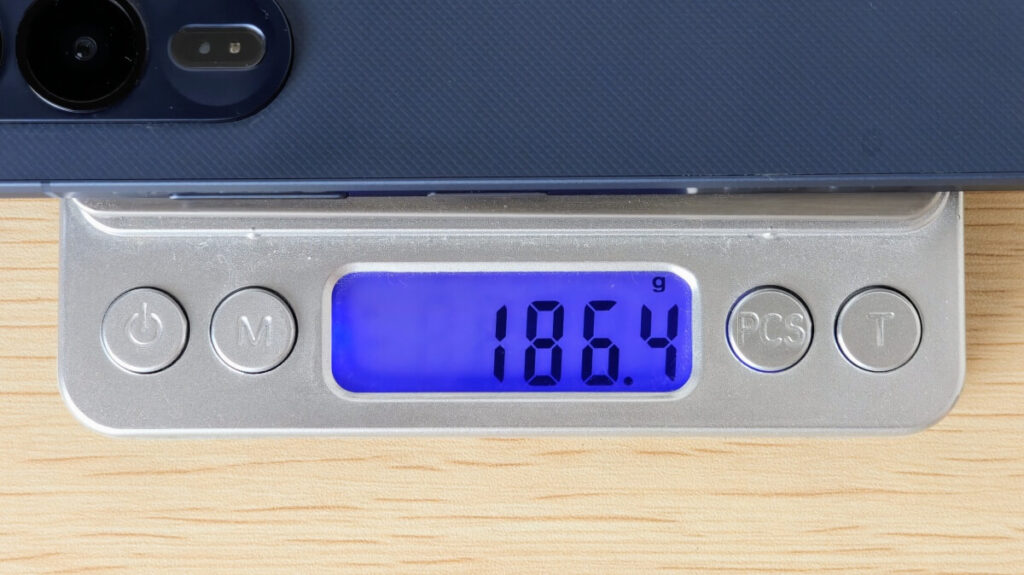
It weighs 186.4g.
With so many recent phones going over 200g, that’s fairly light.
Camera: a little dark
The arrows Alpha2 has a dual camera setup:
- 50MP (wide, SONY LYTIA 710 IMX917 1/1.5″ F1.88)
- 50MP (ultra-wide, Samsung S5KJNS 1/2.7″ F2.05)
That’s the full lineup.
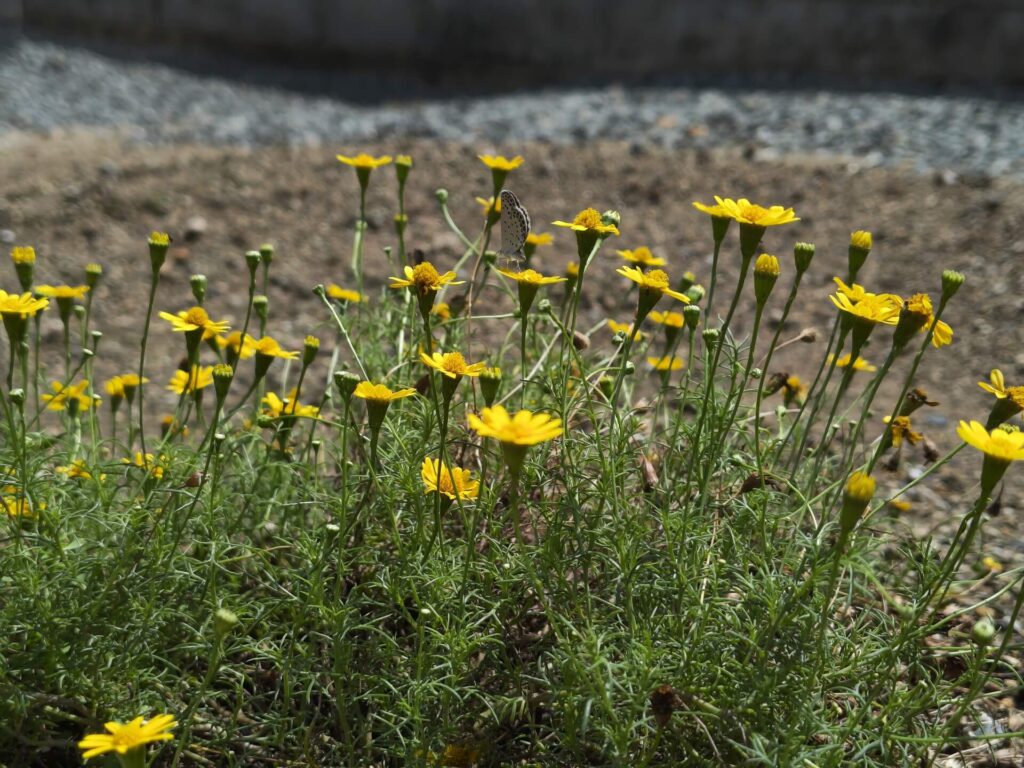
Shots tend to come out a little darker than the real colors.
Subjects around 10–20cm away are also hard to focus on, and in auto macro mode the phone switches to the ultra-wide, so the framing and colors change.

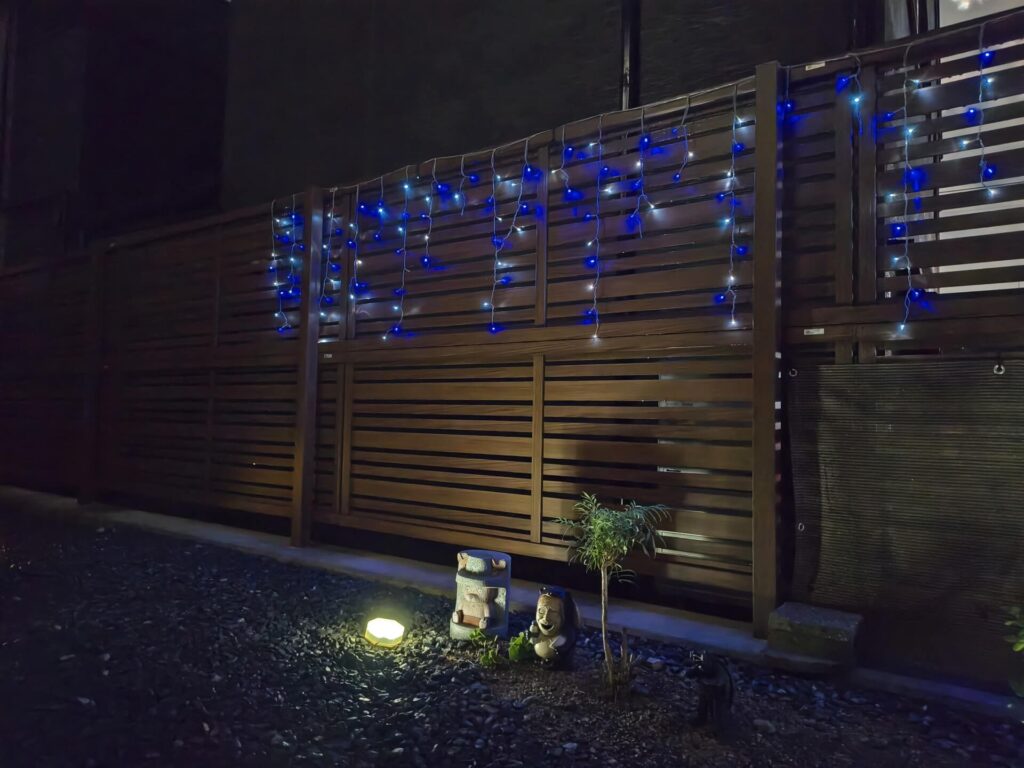
At night it shoots bright enough that you can make out what’s there even in spots that look pitch black to the eye.
Lights and other bright sources blow out, though.
Speakers: adjustable with an equalizer
The arrows Alpha2 has stereo speakers.
Bass is actually there, but mids and highs stand out more, and the back panel vibrates when bass plays.
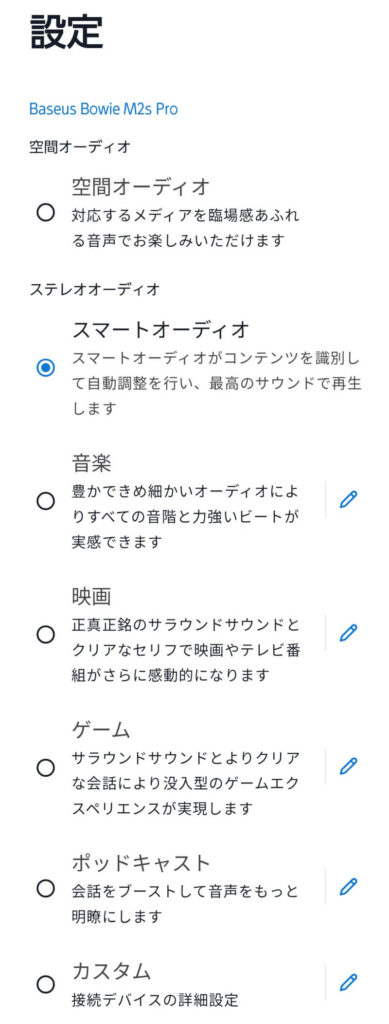
Dolby Atmos is supported, so you can tune the sound for music, movies or with a custom equalizer, and spatial audio is available too.
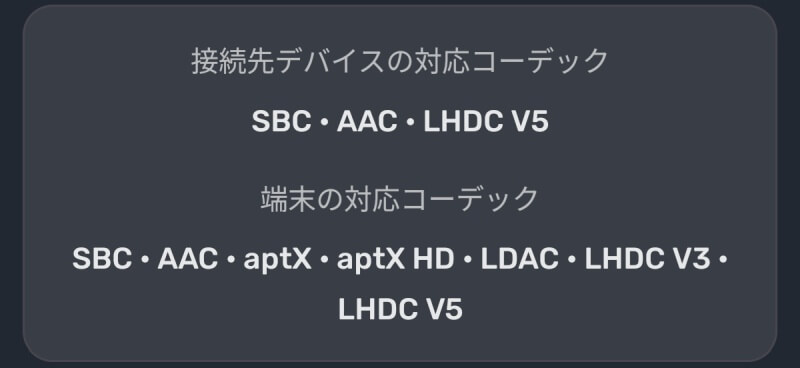
Checking supported codecs with Bluetooth Codec Changer, it handles AAC / aptX / aptX HD / LDAC / LHDC.
LHDC V5 earphones aren’t locked to a single brand, so third-party models work too.
Port: video output supported
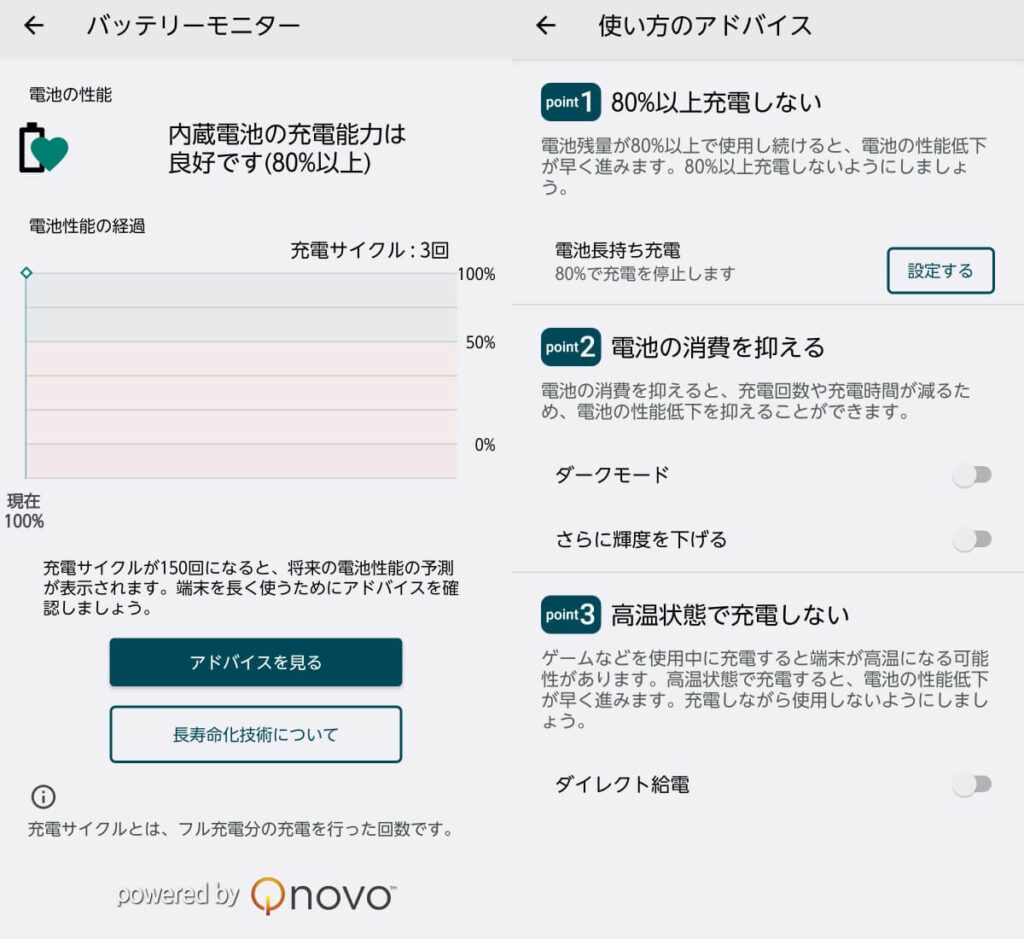
The arrows Alpha2 supports 90W fast charging and takes about 40 minutes for a full charge.
With a third-party USB PD charger I was getting around 40W at 50% battery.
QNOVO’s battery longevity tech and similar measures give it a lifespan of over four years.
Bypass charging is available too, so while you’re using the phone on a charger it feeds the system directly instead of the battery, cutting heat and easing the load on the battery.
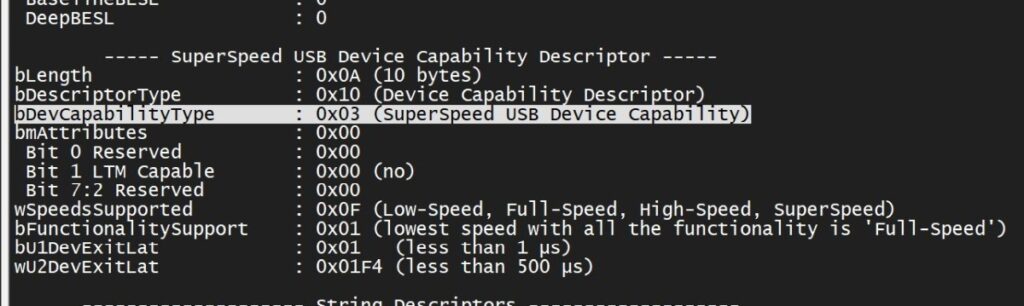
The spec sheet only says “USB3.1 Super Speed”, which is a bit unclear, but in USB Device Tree Viewer only the “SuperSpeed USB Device Capability Descriptor” shows up, so it’s USB 3.2 Gen 1. (If it supported 10Gbps, “SuperSpeedPlus USB Device Capability” would appear as well.)
Data transfer is fast, and video and audio output over DisplayPort Alt Mode works.
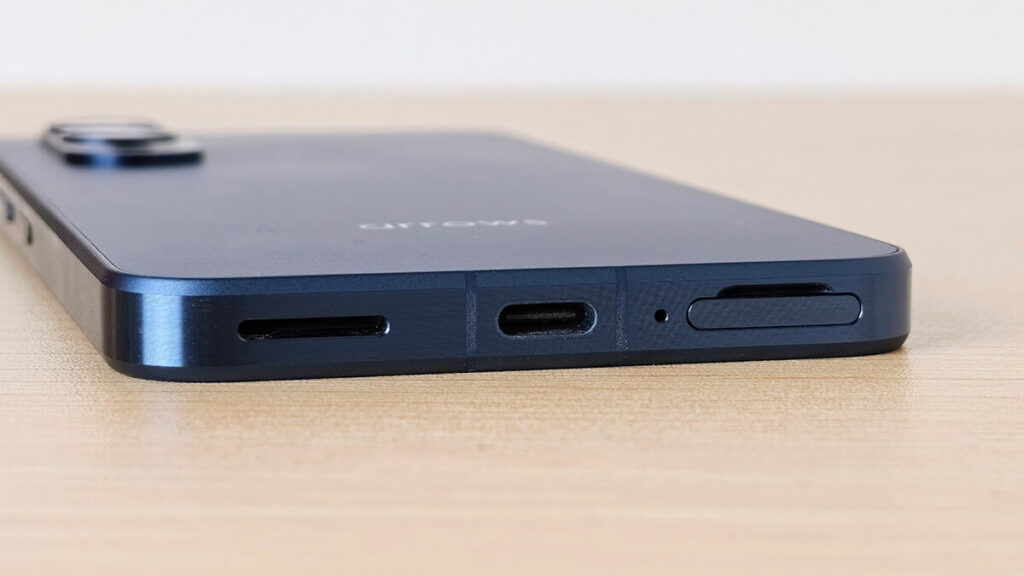
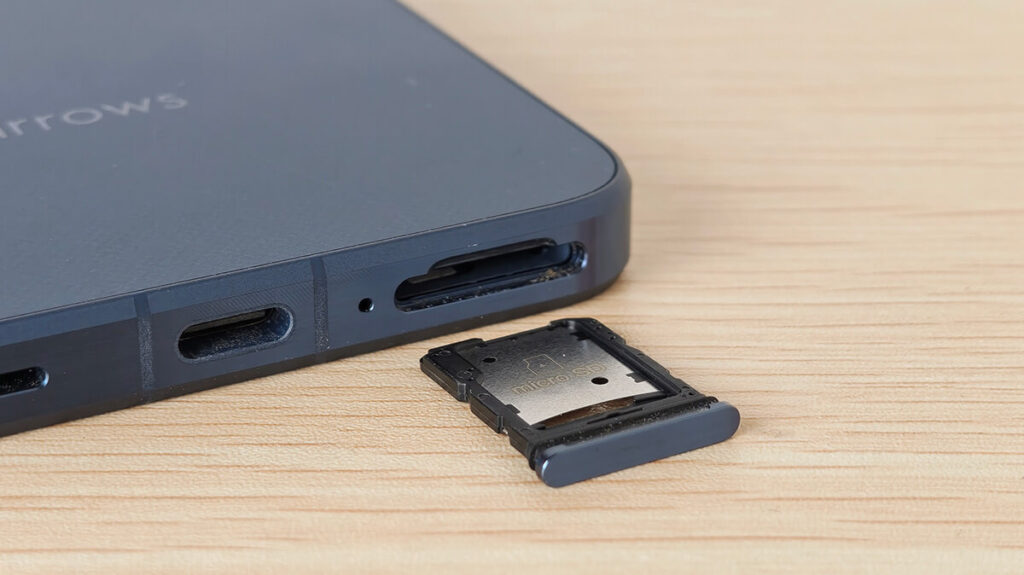
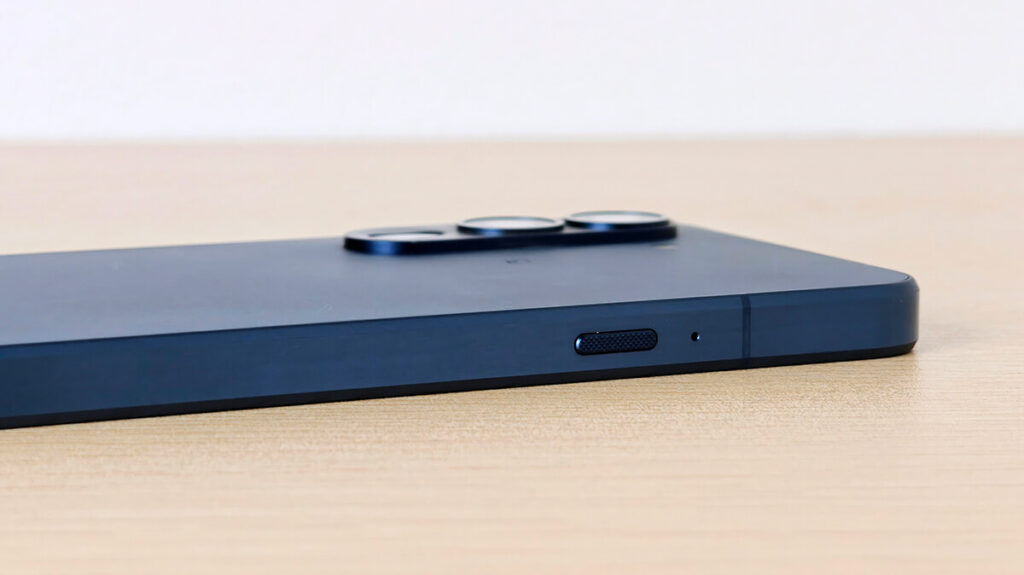
The nano SIM and microSD card tray can be pulled out without a pin.
The setup is nano SIM + eSIM or eSIM ×2, so unfortunately you can’t run two nano SIMs.
Supported bands are:
- 5G NR: n1/n3/n28/n40/n41/n77/n78/n79
- 4G: LTE FDD: 1/2/3/4/5/8/12/18/19/21/28
- 4G: LTE TDD: 38/39/41/42
- 3G: WCDMA: 1/2/4/5/8
- 2G: GSM: 2/3/5/8
That covers every major Japanese network — SoftBank and its sub-brands, Rakuten Mobile including the au partner areas, and docomo.
The power and volume buttons are on the right side.
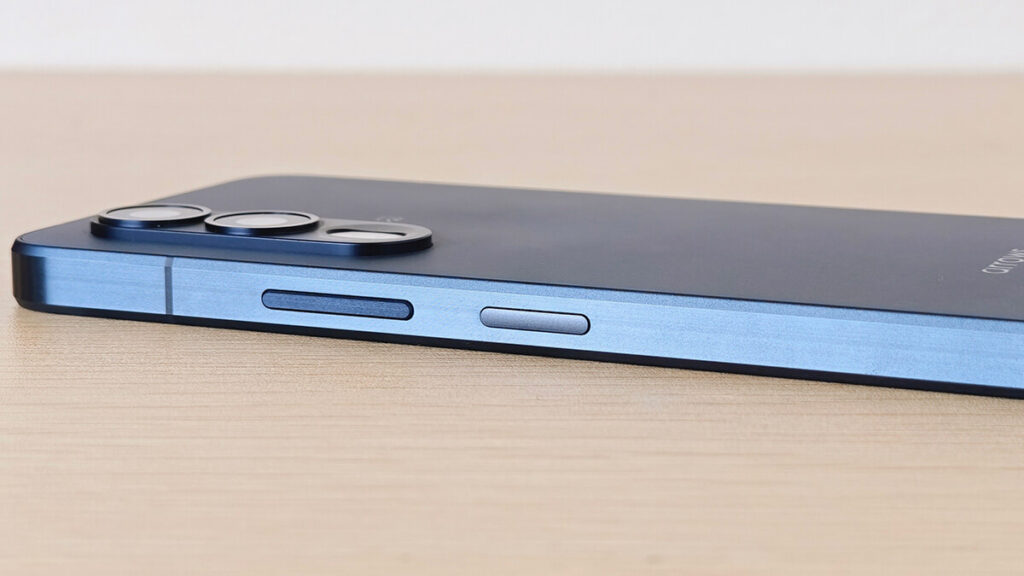
On the left side there’s an action key.
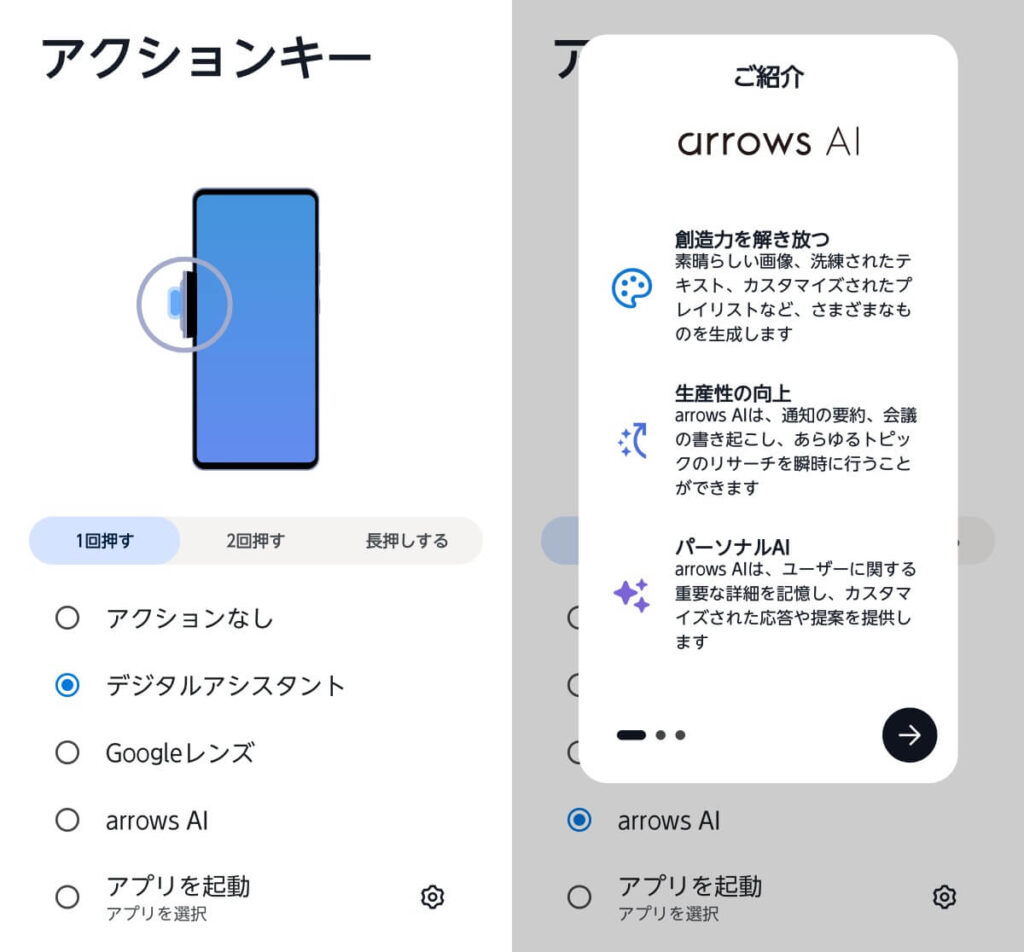
You can set the action key to open the assistant, Google Lens, arrows AI or an app of your choice when pressed.
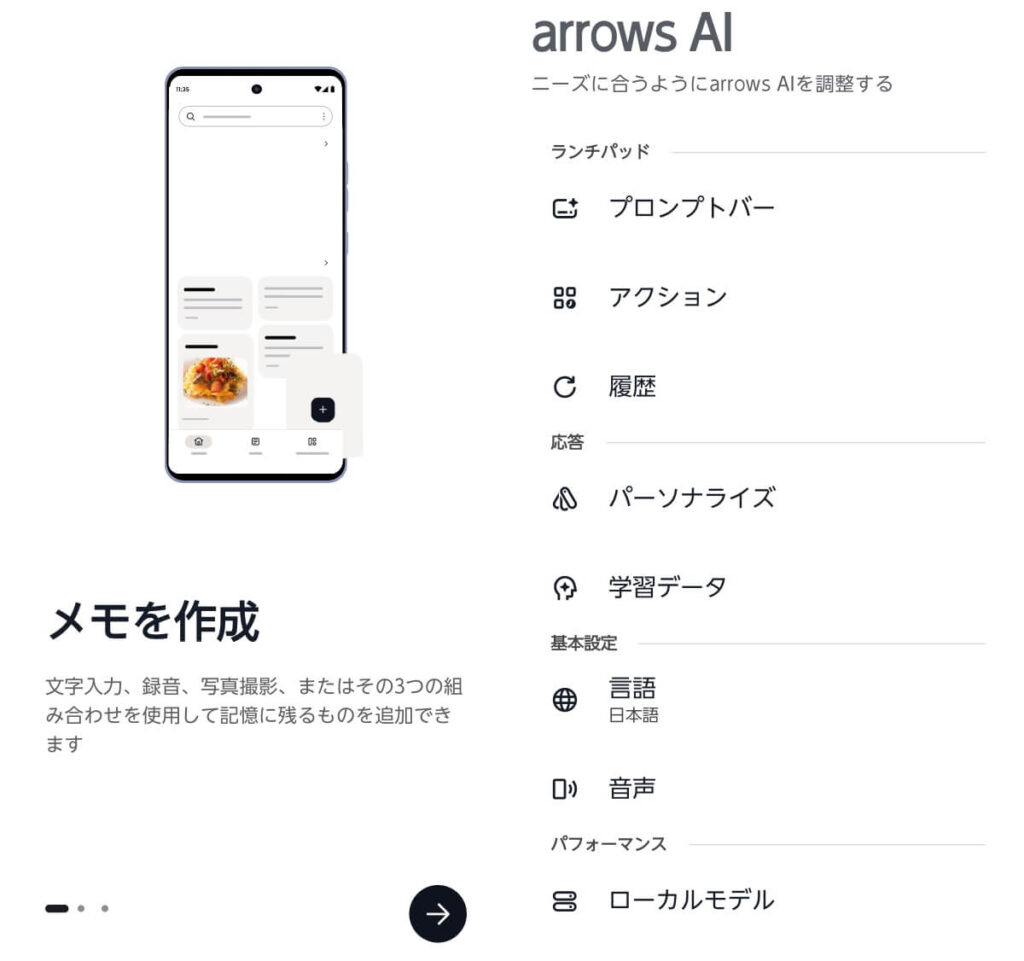
arrows AI requires an account, but it will generate images, build playlists and so on. (Under the hood it appears to be Google Vertex AI and the Gemini Enterprise Agent Platform.)
It can also run text recognition to create notes or summarize notifications, which speeds up everyday tasks.
Performance: smooth for everyday use
The arrows Alpha2 runs a MediaTek Dimensity 8350 Extreme. It’s not suited to gaming, but everyday use is smooth.
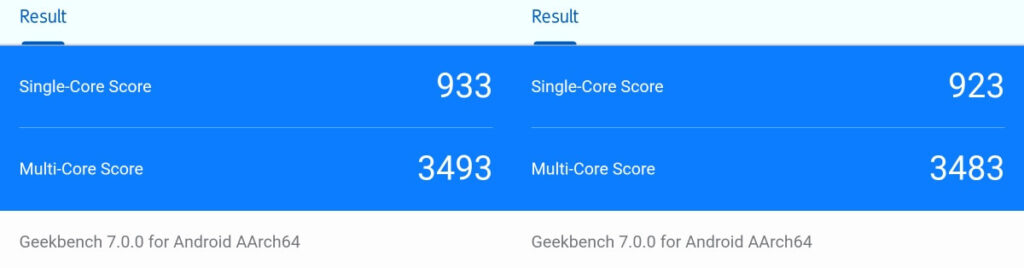
In Geekbench 7, the package-name-spoofed build (which isn’t affected by vendor boost cheating) scored 933 single-core and 3493 multi-core, while the normal build scored 923 single-core and 3483 multi-core.
The gap is small, so FCNT doesn’t appear to be tuning performance based on package name.
A growing number of vendors detect well-known benchmark apps such as AnTuTu by package name and cheat — loosening thermal limits or pinning clocks high only during the benchmark run to make the score look better.
Since that behavior differs from normal app use, you end up with phones that post great benchmark numbers while everything else runs no better than average.
Each vendor boosts differently, so comparing boosted results tells you nothing.
That’s why it matters to change the package name so the app looks like an ordinary one, and get a correct, unboosted score.
I explain this in detail in this article.
It’s a benchmark that measures CPU processing power, the kind used for things like background blur and text processing.
Single-core matters for light everyday tasks, multi-core for heavier work such as games.
I collect my benchmark results in this article.
In the 3DMark Wild Life Extreme Stress Test with a spoofed package name, the score went from 2999 to 1711.
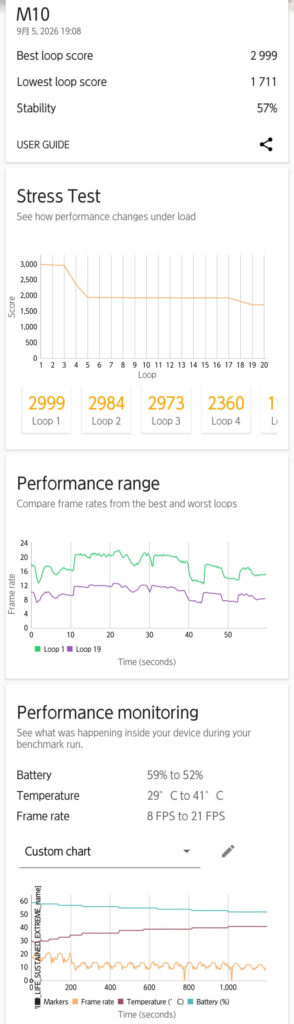
Wild Life Extreme uses the Vulkan API and measures GPU performance with graphics rendered at 3840×2160.
A higher score means smoother 3D rendering in games, and high Stability means the phone can hold that performance for a long time.
It’s only a rough, general indicator of Vulkan performance, so it doesn’t decide gaming performance on its own.
PCMark Work 3.0 (package-name-spoofed build), which measures everyday performance like document editing, scored 11764.
As the score suggests, switching apps and scrolling were smooth, and I never ran into stutter.
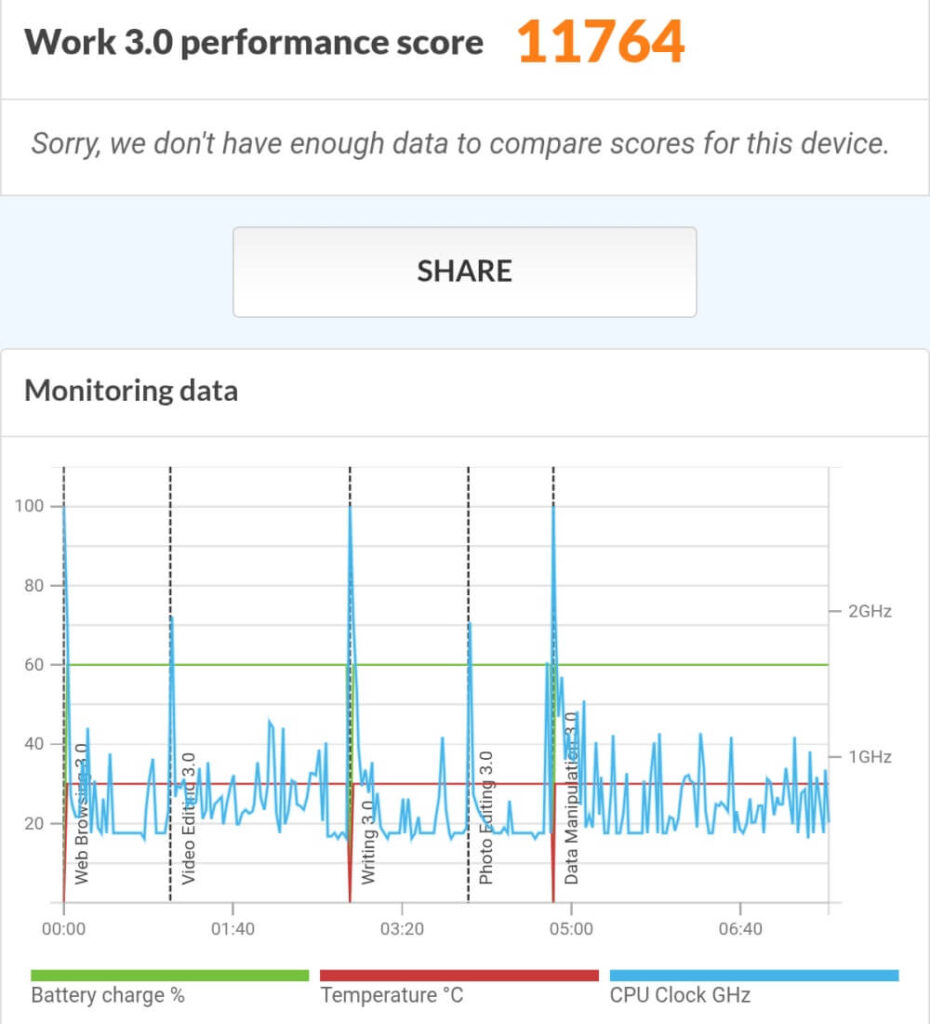
It’s a benchmark that measures processing power for things like web browsing and photo or video editing.
Higher means faster, but the balance with battery drain matters too, so a lower score doesn’t necessarily mean the phone is bad.
Anything over 10000 is plenty.
The official spec sheet doesn’t list the memory or storage standard, but from the CPDT Benchmark results I’d say it’s LPDDR5X and UFS 3.1.
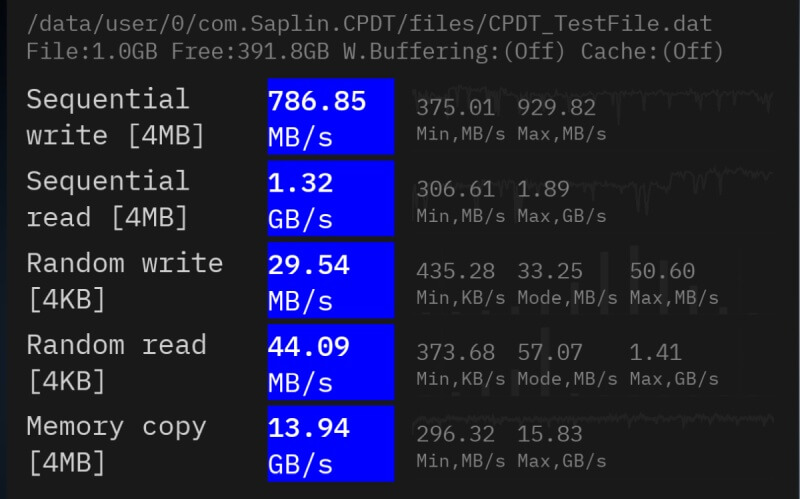
Sequential read and write is the speed that matters when copying large files or encoding and decoding video.
Random read and write is the speed for small files, and that’s what matters when using apps and games.
Playing the CPU-heavy Genshin Impact in performance mode with every graphics option maxed and the frame rate set to 60FPS, 30 minutes in Nod-Krai measured with Scene gave an average of 34.8FPS at 128.16mW per FPS.
Power efficiency is poor, and the battery temperature climbed to about 46.9°C at its peak.
By the eight-minute mark it was already limiting to 30FPS, so comfortable play means turning the graphics down.

The lower the power draw per FPS, the better the power efficiency.
Good power efficiency means less battery drain; poor efficiency means the battery empties fast.
Phones with poor efficiency in games tend to drain heavily in other apps too, so you’ll often feel the battery dropping quickly.
Average FPS (frame rate) shows how consistently smooth the display stays, and higher is better.
(Strictly speaking, a high average FPS combined with little of the flicker known as jank is what makes it feel smooth.)
Conclusion
The arrows Alpha2 is a phone built to keep going: water, dust and shock resistance, a battery rated for four years, and five years of security updates.
I’d recommend it to anyone who doesn’t really play games and just wants everyday use to feel smooth.